
The Definitive Guide to the Five Love Languages Assessment
5 Love Languages Quiz by Dr. Gary Chapman
Get StartedWhy the Five Love Languages Framework Still Matters
Healthy relationships thrive on clear communication, emotional safety, and consistent follow‑through. The well‑known five‑language framework distills complex needs into simple categories that everyday people can understand and act on. Couples, friends, and even co‑workers benefit when affection is expressed in ways that actually register. Rather than guessing what will land, you can translate intention into impact with practical routines and language that is easy to remember.
Relationship educators often highlight how this framework transforms vague expectations into observable behaviors that reduce misunderstandings. In counseling contexts, the five love language test by Dr. Gary Chapman is widely referenced for revealing how partners express care. That clarity sets the stage for boundaries that feel respectful and gestures that feel sincere. When love is delivered in a preferred “dialect,” minor annoyances fade because deeper needs are being met with regularity and thoughtfulness.
Across life transitions, new jobs, parenting, relocation, the model offers quick recalibration without complicated jargon. For many couples, the five love languages test by Gary Chapman provides a shared vocabulary that reduces friction. Even when stress spikes, a reliable map for giving and receiving care can stabilize morale and keep goodwill intact.
- It simplifies conversations about needs without pathologizing anyone.
- It turns abstract feelings into concrete, repeatable actions.
- It helps partners negotiate time, energy, and attention fairly.
- It can be revisited as life circumstances change.
What Each Love Language Means
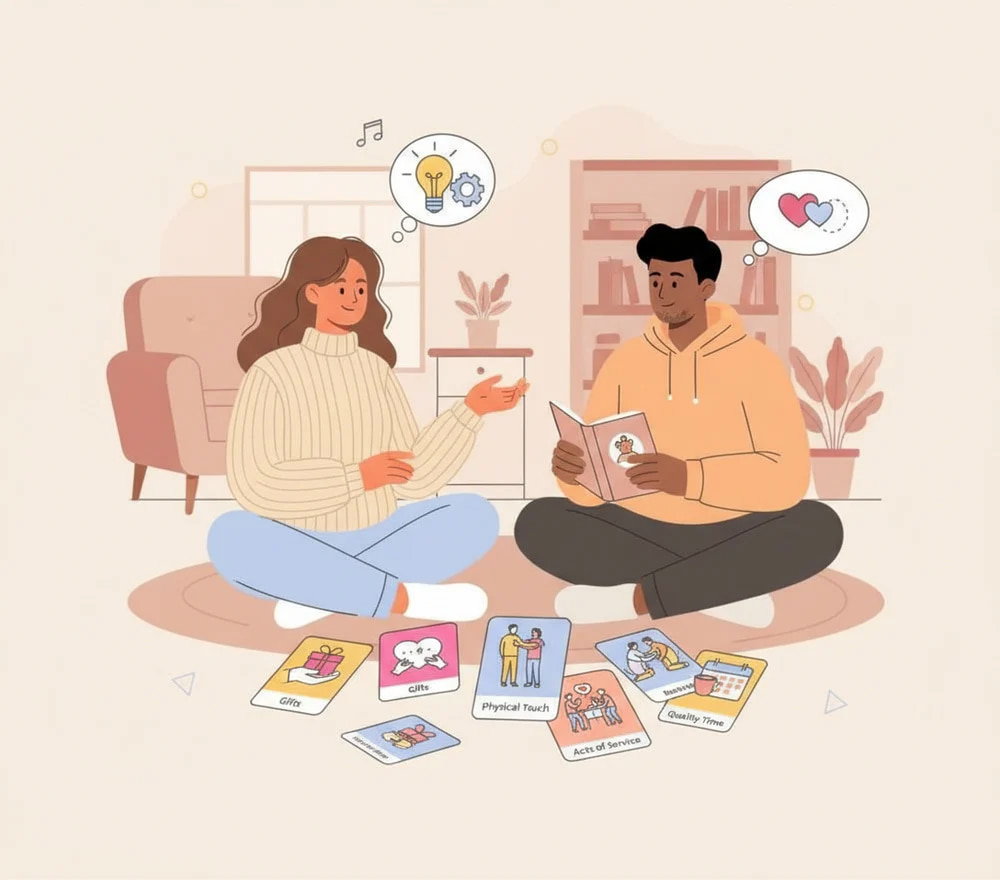
Under the hood, the framework groups affection into five recurring themes found across many relationships. Each language highlights a different way people recognize and interpret love in daily life. Rather than ranking them, think of these as five channels you can tune into with varying strength. Most people prefer two or three, and preferences can subtly shift over the years as responsibilities and stressors evolve.
- Words of Affirmation: Encouraging phrases, appreciation, and verbal empathy.
- Quality Time: Undistracted attention, shared activities, and meaningful presence.
- Acts of Service: Helpful tasks, planning, and thoughtful follow‑through.
- Gifts: Symbolic tokens, surprises, and thoughtful selections with personal meaning.
- Physical Touch: Hugs, hand‑holding, and affectionate contact that feels safe.
Understanding definitions is only the beginning because nuance matters in real life. Among practitioners, the Gary Chapman love language test is considered a friendly starting point rather than a clinical diagnosis. The goal is actionable insight, not rigid labeling or one‑size‑fits‑all prescriptions. When time is scarce, printable guides and simple rituals help busy people apply what they learn right away.
When time is short, the Dr. Gary Chapman love language quiz still offers meaningful snapshots that prompt reflection. Short debriefs after date nights or team stand‑ups can surface micro‑preferences like tone, pacing, and context. With that awareness, even small gestures can feel surprisingly big.
How to Take the Quiz and Interpret Results
Before you begin, set aside a quiet moment and approach the questions with curiosity instead of trying to “game” the outcome. Honest answers produce a more accurate picture of how you naturally interpret care. Afterward, look beyond the top score to notice secondary strengths and situational factors such as stress or fatigue. It also helps to compare results with a partner or friend and ask for real‑world examples that make the insights concrete.
| Language | Signs You Value It | Try These Micro‑Actions |
|---|---|---|
| Words of Affirmation | You replay compliments and recall tone vividly. | Send a two‑line note naming a specific trait you admire. |
| Quality Time | Undivided attention feels energizing and restorative. | Schedule a distraction‑free 20‑minute walk and talk. |
| Acts of Service | Practical help reduces stress more than pep talks. | Choose one task to remove from your partner’s plate today. |
| Gifts | Small tokens feel like “I see you” moments. | Keep a notes app list of favorites to inspire thoughtful surprises. |
| Physical Touch | Warm, consensual contact grounds your nervous system. | Offer a hug or hand squeeze when greeting and parting. |
Scoring highlights tendencies, but conversation translates those tendencies into routines. Before any deep work, the 5 love languages quiz Gary Chapman can orient you to likely preferences. A follow‑up chat that gathers examples of what did and did not land in the last week will sharpen the picture further. Keep the energy focused on curiosity, not courtroom‑style debates about who is right.
Personalizing the insights prevents generic advice from falling flat in specific situations. After you review outcomes, the Gary Chapman love languages quiz encourages action steps that feel tangible. Consider Dr.afting a small “playbook” with three go‑to gestures per language so you can flex as needs shift throughout the month.
Benefits for Individuals, Couples, and Teams
One person can use the framework to improve self‑advocacy, while couples can use it to align routines and repair patterns. Managers and teammates can also adapt the concepts to reduce misfires in appreciation and feedback. When people feel seen in the way they prefer, morale rises and conflict de‑escalates more quickly. That foundation enables bolder goals, because people have confidence that support will be delivered in ways that truly help.
- Individuals: Build habits that replenish energy and clarify boundaries.
- Couples: Design rituals that nurture security and reduce resentment.
- Teams: Tailor recognition and collaboration norms to diverse preferences.
Repair conversations get easier when a shared language removes guesswork and defensiveness. In long‑term partnerships, the love language quiz Gary Chapman often functions as an icebreaker for courageous conversations. Many pairs report fewer misunderstandings and faster reconnection after small ruptures when they treat the framework as a living practice. For new relationships, the 5 love language test Gary Chapman offers a low‑pressure way to align expectations. A few minutes of insight can avert months of mixed signals.
Practical Strategies to Apply Your Profile
Insight without action fades quickly, so build micro‑habits that make care predictable. Anchor gestures to existing routines, morning coffee, commute ends, or weekly planning sessions. Use shared calendars, sticky notes, or habit apps to trigger the right behavior at the right time. Keep experiments small, observable, and frequent so momentum grows without pressure.
- Create a rotating “care menu” with three options per language.
- Schedule a 15‑minute weekly retro to review what worked.
- Swap lists of five specific gestures you each enjoy.
- Practice consent and check‑ins, especially for touch and time.
Consistency matters more than grand gestures because trust is built in the micro‑moments. During weekly check‑ins, the Gary Chapman five love languages quiz can remind you to rotate gestures across all categories. If you’re leading a group, tailor acknowledgments to each person’s preference to avoid one‑size‑fits‑none celebrations. When facilitating retreats, the Gary Chapman 5 love languages quiz helps groups design rituals that respect diverse needs. Tailored appreciation becomes a cultural norm rather than a rare occasion.
Common Mistakes and How to Avoid Them
Misuse often comes from oversimplifying the model or weaponizing scores. Labels are snapshots, not destiny, and they do not excuse neglect in less‑preferred areas. Another trap is assuming your top language never changes, even as life stages shift priorities. A growth mindset, regular feedback, and flexible tools will keep the approach human and kind.
- Avoid “score superiority” and remember every language deserves airtime.
- Revisit preferences after big transitions like parenthood or job changes.
- Ask for consent and context, especially around touch and time commitments.
- Translate insights into behaviors instead of abstract intentions.
Nuance keeps the framework from becoming a caricature of real intimacy. If you chase a single label, the five love languages Gary Chapman quiz may feel limiting instead of liberating. Invite specific examples and keep iterating so the practice stays fresh and responsive. By staying curious, the five love languages quiz Gary Chapman becomes a doorway to nuanced dialogue rather than a rigid script. With that posture, the model remains a helpful compass rather than a cage.
FAQ: Your Top Questions Answered
How accurate is the assessment for complicated relationships?
It offers directional insight rather than a clinical verdict, which is ideal for day‑to‑day adjustments. You’ll get the best results when you pair scores with real examples, feedback, and small experiments. Think of it as a map that needs regular updates as your terrain changes.
Can preferences change over time?
Yes, major life shifts can tilt priorities, especially around energy, time, and touch. Revisit your profile after transitions and ask for updated examples that clarify what lands now. Treat the practice as iterative rather than fixed.
How do we apply the model when we’re short on time?
Attach one tiny gesture to an existing routine so it requires no extra scheduling. For instance, offer a specific appreciation during breakfast or send a quick note after meetings. Small, repeatable actions compound faster than occasional grand gestures.
What if our top preferences clash?
Negotiate a fair rotation and set minimums for less‑preferred areas so both people feel considered. Create a shared “care menu” that balances effort with impact. Check in weekly to adjust frequency and timing based on real‑world feedback.
Is this approach useful outside of romance?
Absolutely, teams use the same principles to tailor recognition and collaboration. Managers can adapt the language to workplace‑appropriate behaviors that make appreciation land. When people feel seen in their preferred way, performance and trust improve.